













A new hair color can make your skin glow, your eyes brighter and your whole face look more awake. The wrong one can make you look tired, washed out or sallow, even if the color itself is beautiful. The difference usually comes down to one thing: your skin's undertone.
Skin tone vs undertone
Your skin tone is how light or dark your skin is on the surface: fair, light, medium, olive, tan, deep. It can change with a tan.
Your undertone is the subtle color beneath the surface, and it doesn't change. There are three main undertones:
- Warm: yellow, golden or peachy.
- Cool: pink, red or bluish.
- Neutral: a mix of both, or neither stands out.
Olive skin is often described separately: a greenish or grey-gold cast, usually close to neutral with warm leanings.
People of every skin tone can have any undertone. Fair skin can be warm, and deep skin can be cool.
Three quick undertone tests
1. The vein test
Look at the veins on the inside of your wrist in daylight.
- Mostly green: warm undertone.
- Mostly blue or purple: cool undertone.
- Hard to tell, or a mix: neutral.
2. The jewelry test
Which looks better against your skin, gold or silver?
- Gold makes you glow: warm.
- Silver looks better: cool.
- Both work: neutral.
3. The white test
Hold a pure white sheet of paper and an off-white or cream fabric next to your bare face.
- Cream looks better: warm.
- Pure white looks better: cool.
- No difference: neutral.
If two of three tests agree, that's probably your undertone.
Hair colors for warm undertones
Warm skin looks great with colors that have gold, copper or red in them.
- Blonde: golden, honey, butterscotch, strawberry blonde.
- Red: copper, ginger, auburn.
- Brown: chestnut, caramel, golden brown, chocolate with warm highlights.
- Black: soft black or dark brown with warm tones, rather than blue-black.
Be careful with: ash blondes, platinum, and blue-black, which can make warm skin look dull or yellowish.
Hair colors for cool undertones
Cool skin looks great with colors that have ash, blue or violet in them.
- Blonde: ash blonde, platinum, icy blonde, champagne.
- Red: burgundy, cherry, wine.
- Brown: ash brown, cool espresso, mushroom brown.
- Black: jet black and blue-black.
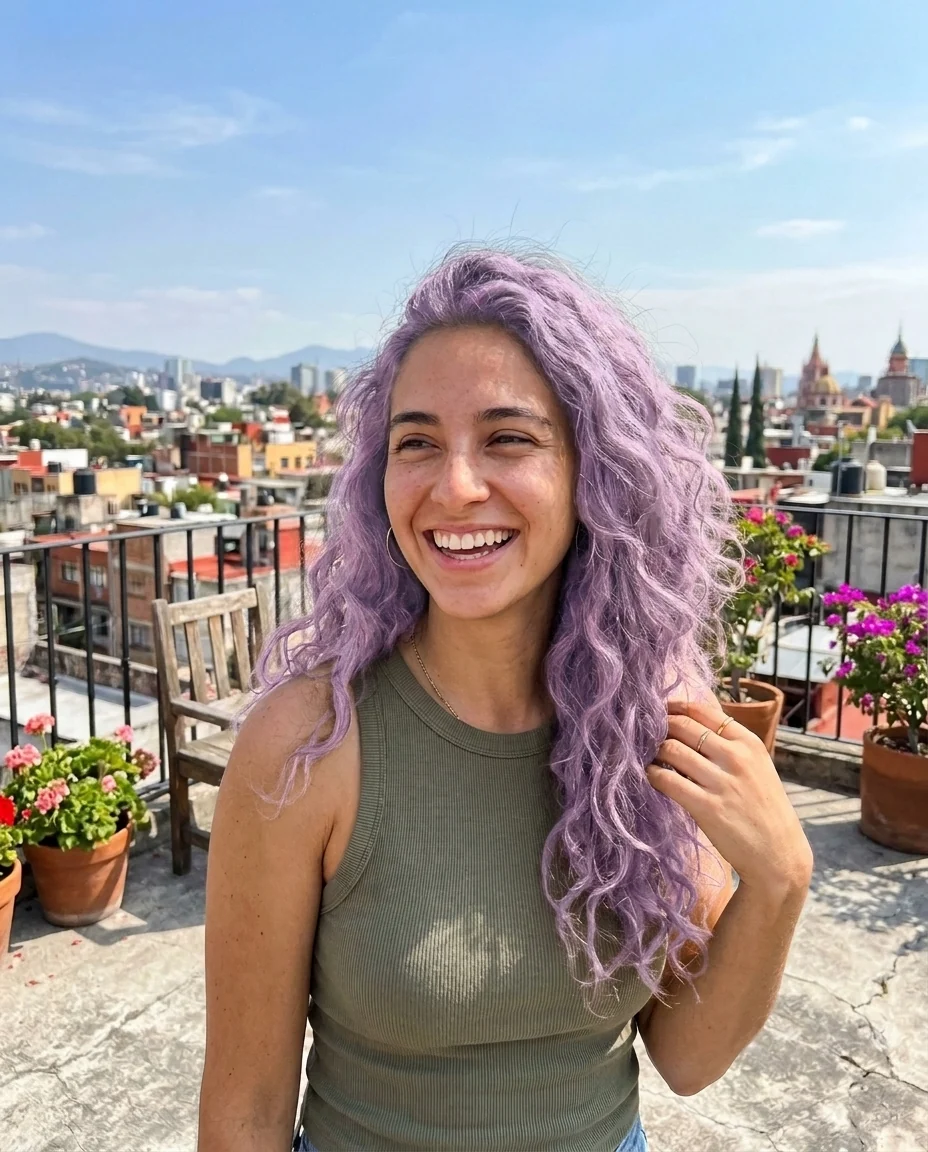
- Fashion colors: silver, lavender, pastel pink, icy blue.
Be careful with: golden, copper and orange-red tones, which can make cool skin look red or flushed.
Hair colors for neutral undertones
Lucky you: most colors work. Neutral skin can wear both warm and cool shades, as long as they're not extreme. Try:
- Beige blonde or soft golden blonde.
- Rose gold.
- Medium chocolate brown.
- Soft auburn.
- Balayage that mixes warm and cool tones.
Don't forget contrast
Undertone is half the story. The other half is contrast between your hair, skin and eyes.
- High natural contrast (very dark hair with fair skin, or very light eyes with dark hair): bold colors and strong contrasts suit you.
- Low natural contrast (light hair, light skin, light eyes, or dark hair, deep skin, dark eyes): colors close to your natural shade usually look most harmonious. Dramatic changes can overpower your features.
A general rule: staying within two or three shades of your natural color looks the most natural, and is much easier to maintain as roots grow.
Eye color tips
- Blue eyes pop with warm golden blondes, coppers and rich browns.
- Green eyes glow with auburn, copper and warm reds.
- Brown eyes suit almost everything; caramel and honey highlights bring out golden flecks.
- Hazel eyes look great with golden brown and copper.
Preview colors on your own photo
The tests narrow the choice, but seeing yourself with a new color settles it. The hair color changer recolors your hair in a photo, keeping your haircut, texture and face the same. Describe the shade you want, like "honey blonde", "copper red" or "pastel lavender", and compare a few options side by side.


 Hair color changerRecolor your hair, keep your cutTry it with your photo
For the most useful preview:
- Use daylight, not warm indoor bulbs, which shift your skin tone.
- No filters or makeup-heavy photos, so your real undertone shows.
- Hair down and visible around the face.
- Try one shade warmer and one shade cooler than your favorite, to see which side suits you better.

Highlights, balayage and gray hair
You don't have to change your whole head. Highlights and balayage add lighter pieces around the face, which is where they matter most for your complexion. They're also gentler on maintenance, because regrowth blends in. If you're going gray, cool skin tones often look striking with silver and white, while warm skin tones may prefer soft golden blending to keep warmth near the face. Either way, the undertone rule still applies to the shades placed closest to your skin.
Before you dye
- Bring your preview to the colorist, along with your undertone.
- Ask about maintenance. Platinum and pastels need frequent toning and root touch-ups. Reds fade fastest.
- Do a strand test with box dye.
- Think about your eyebrows. A big change in hair color may need a small change in brow color to look natural.
Find your undertone, pick two or three candidate shades, preview them on your photo, and choose the one that makes you look awake and like yourself.

